
MARCH 2026
What Turnaround Season Means for Heartland Residents
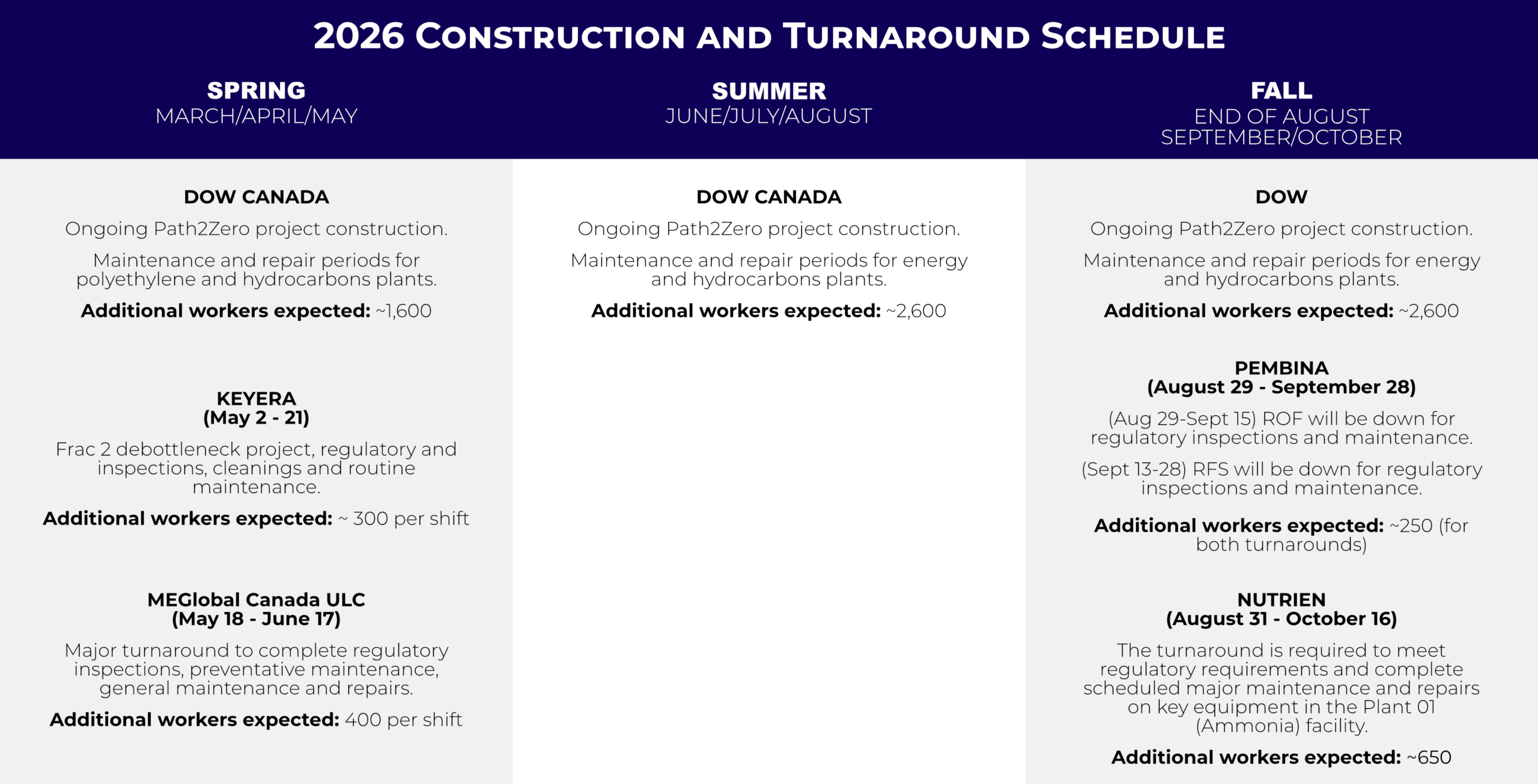
As warmer weather arrives, activity begins to ramp up across Alberta’s Industrial Heartland. Each year, many facilities undertake what’s known as “turnaround” work, a planned period of maintenance, inspections, and upgrades that helps keep operations safe and reliable for the long term.
Turnarounds are a normal and necessary part of running large industrial facilities. During this time, equipment is carefully inspected, repaired, cleaned, and in some cases upgraded. These efforts support safety, environmental performance, and overall efficiency, helping facilities continue operating responsibly in the region.
“For people who live and work near the Industrial Heartland, turnaround season can bring some noticeable changes,” says Patrick Howe, Executive Director of the Northeast Capital Industrial Association. “Residents may see more workers in the area, increased traffic on local roads, or activity around industrial sites that looks different from day-to-day operations. In some cases, there may be temporary increases in noise, light, or flaring as systems are safely shut down and restarted. All of this work is carefully planned and managed to meet strict safety and environmental standards.”
Turnarounds also bring economic benefits to the broader community. The projects require skilled trades and support services, creating jobs and boosting local businesses. Hotels, restaurants, suppliers, and other service providers often see increased demand during this time. “Turnarounds are not only about maintaining equipment — they’re also an important economic driver for the region,” Howe adds. “They bring thousands of skilled workers to the area and support local businesses, while ensuring facilities continue to operate safely and efficiently.”
Industrial operators work closely with regulators and local partners to minimize impacts and keep the community informed. Safety remains the top priority throughout all phases of turnaround work.
Turnaround season is temporary, but the work completed during this period plays an important role in keeping facilities operating safely and efficiently year-round and in supporting the long-term strength of the Industrial Heartland and surrounding communities.
If you have any questions about industrial activity in your area, call the UPDATEline at 1.866.653.9959. Many companies use the UPDATEline to keep the community informed about turnaround and construction activities through pre-recorded messages, available 24 hours a day. You can also visit company social media accounts for their latest updates.
Heartland 101 Archives

Heartland 101 Archives
Input your information to subscribe to our newsletter
Input your information to subscribe to our newsletter